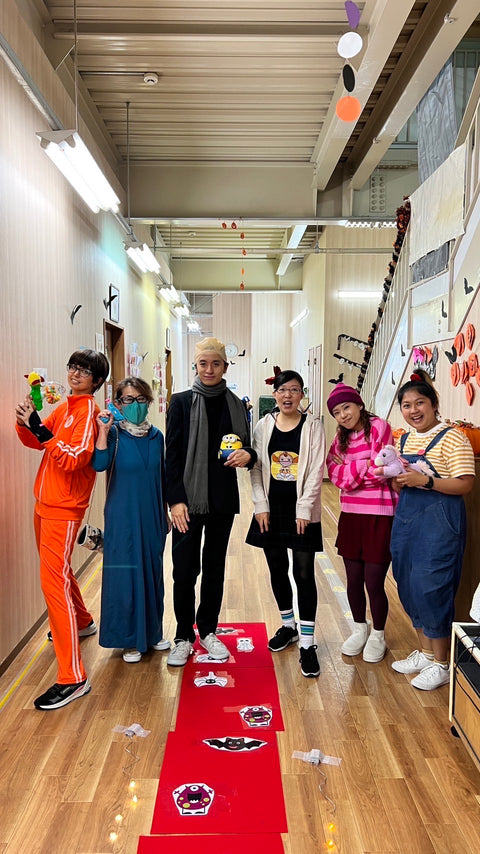

Momoka
Momoka is a kindergarten teacher with three years of classroom experience teaching English and Japanese to young children. She uses a play-based approach that introduces language through picture book readings, seasonal games, songs, and simple activities that teach hiragana, numbers, and practical vocabulary. She can explain concepts in English when needed and adapts lessons to each child’s needs, using clear routines, flexible seating, and tactile supports to help children who struggle with focus or strong preferences. She was recognized with an award for attentive support and craft-based teaching and received positive feedback from families for her practical, patient care. Momoka loves animals and cares for a dog, a cat, and a puppy, and families value her steady presence and ability to make language learning joyful and reassuring.
Monday: No availability (Eastern Standard Time)
Tuesday: 6am-2pm (Eastern Standard Time)
Wednesday: 6am-2pm (Eastern Standard Time)
Thursday: 6am-2pm (Eastern Standard Time)
Friday: 6am-2pm (Eastern Standard Time)
Saturday: No availability (Eastern Standard Time)
Sunday: 4pm-12am (Eastern Standard Time)
Children: I want to introduce children to the joy of learning a language through picture book readings and games based on Japan’s rich seasons and traditional events. We’ll start with learning hiragana, numbers up to ten, and simple, practical vocabulary.
Adults: For beginners, we’ll start with the basics like hiragana, katakana, and numbers, then tailor the approach to each learner’s goals, whether that’s preparing for the Japanese-Language Proficiency Test (JLPT), focusing on conversational skills, or learning to read and write kanji.
I'm not a native English speaker, but I've been studying English since I was 6. I became more enthusiastic about learning it when I was 13, entered a high school specialized in English, studied abroad in the United States at 16, and later worked as an English teacher for young Japanese children at a kindergarten for 3 years, so if there's anything clients don't understand in Japanese, I can explain it to them in English.
I've never been tutoring before but I was teaching English and Japanese to Japanese young children in Japan for 3 years. While supporting children in their daily activities at the kindergarten, I have also taught them the joy of learning languages by incorporating English and Japanese in a fun and accurate way through games, activities, dance, and other approaches.
Subject Expertise
My mission

My mission is to be a bridge between Japan and the world, sharing the joy of language learning.
My Story
My interest in the field of education began in my childhood, when, as the younger of two sisters surrounded by many younger cousins, I longed to be an older sister, and spending time with them taught me the sense of responsibility that comes with being the older one.
Cognitive Diversity
How I adapt to students with diverse intellectual needs.What I’ve learned from working with children is that each one is unique in every way, and the most important thing is for adults not to try to change them by force. Even if, during one of my lessons, a child becomes upset, cries, or has an unexpected reaction, I will take the time to talk with them until they calm down, or shift the conversation to something that distracts them. I don’t see such moments as negative incidents, but as opportunities for the child to grow, and I respond to them with that mindset as a tutor.
He was very good at drawing and spent most of his free time doing it. However, it often became an issue when he wanted to keep drawing instead of transitioning to class activities, and sometimes he would even be late to school because he was drawing at home before coming. Since I enjoy crafts, I encouraged his curiosity by involving him in parts of the classroom craft projects and also set time limits for his drawing. This way, I was able to further nurture his interests while helping him practice setting boundaries for himself.
When I was in charge of a class of three-year-olds, there was one child who didn’t want to sit on a chair during circle time which is a 45-minute session held every morning. He had difficulty sitting for long periods, and even for short times, sitting on a chair often made him cry. After observing him for several months and trying different approaches, I realized he was uncomfortable with the texture of the chair. Later, it was discovered that he had ADHD. From then on, I supported him by letting him sit in ways that felt comfortable for him such as placing his favorite towel on the chair, sitting on the teacher’s lap, or sitting on the floor, so that he could still participate in circle time.
She had very strong preferences, and if something about her belongings such as her lunch bag or water bottle was even slightly different from what she was used to, she would have a tantrum. She also cried or refused if anyone other than certain teachers held or touched her. Fortunately, I was one of the teachers she trusted, so I was able to get to know her well. I discovered that when she had a tantrum due to her strong preferences, giving her a hug helped her calm down. I stayed with her until she felt settled, but since being with her constantly would affect fairness toward the other children, I also shared her needs and traits with the other teachers. I suggested that instead of expecting her to change, we adjust the way we interacted with her to better support her.
She helped my daughter enjoy going to school. She is a safe and reliable teacher. She took the kids seriously at all times. Even when my daughter was very shy and cried and didn't want to go to school, she took her mom's place and reassured her and entertained her. I always trust her because my daughter loves Momoka.
Momoka is always smiling and full of love.
When my daughter had a small injury at school, she carried her all the way to the hospital.
When I met my daughter, she slept peacefully in her love. I will never forget how grateful she was!
My daughter was taught English.
We were always taken care of outside of class.
We enjoyed learning a lot of English.
Momo loves children a lot.
My daughter loves Momo.
She is a popular and highly recommended teacher. They love the children a lot.
They warn me about bad things and praise me a lot for
good things.
They offer fun lessons
I wanted him to go to school happily everyday and get used to it as fast as possible. Thanks to her, he found fun in leaning English. She’d always tried to understand him, and tried to think the same perspective as his to understand what’s in his heart. I love the way she smiles.
I feel that she pays close attention to the children. My son is very shy, and there were times when he didn’t join the activities, but she gently encouraged him at his own pace, never rushing him and always remaining positive. She showed the same caring attitude toward all the children, and I believe the parents had a great deal of trust in her. She is bright and genuine, and you can really feel that she loves the children from the heart. She enjoys conversations with parents and has a wonderful sense of curiosity. She is also very responsible—not only affectionate with the children, but also firm when needed. She takes initiative, thinking for herself and anticipating what needs to be done instead of waiting for instructions. I think this comes from her ability to carefully observe those around her.
She not only helped our still-growing children develop good daily habits, but also brought English into their everyday lives in a fun and natural way. Thanks to her, they became interested in the language and started using more and more English words. I truly love how she engages with the children with such sincerity and warmth, and how she embraces and accepts each one of them for who they are.