SEA Homeschoolers

SEA Simple Homeschool Planner - SEA Books & More

Staying organized in a relaxed homeschool doesn’t have to mean rigid lesson plans. We reviewed SEA planners and tested them for usability—and this Simple Homeschool Planner delivers high flexibility in a clean format. SEA Publishing created it with 82 undated pages for monthly goals, weekly planning, unit study mapping, and reading logs—all while supporting the SEA community. We love its clean layout and intentional design—it supports planning without imposing structure. Ideal for families who need a light but effective planner. If you prefer digital apps, a paper planner might feel redundant, but this one’s still handy. Pro tip: Stick a set of printable stickers on the inside cover to personalize and track milestones.

Recommended Ages

Parents and Caregivers

Style
Project-BasedScreen-FreeCaregiver-LedHands-On

The Science of Climate Change: A Hands-On Course  is geared toward a range of age levels.

To make sure that the materials are accessible for all students in that age range this graphing activity has two versions. One set of graphs is a dot-to-dot activity for younger learners, where much of the graphing work has been done, and the real work is answering the questions at the end of the activity. There is also a version for older learners who use the information from a data table and to plot data points on the graphs.

The activities in The Science of Climate Change  include hands-on labs, coloring, graphing, scientific modeling, and even a field trip.

This coloring activity looks at the difference between the amounts of products that can be made from materials that are not recycled materials versus recycled materials using the same amount of energy. Recycling is one of the simple steps people can take to shrink their carbon footprint.

The data for The Science of Climate Change was obtained from credible science sources: National Oceanic and Atmospheric Administration (N.O.A.A.) Earth Systems Laboratory (ESL) National Aeronautics Space Administration (NASA) Environmental Protection Agency (EPA) National Renewable Energy Laboratory (N.R.E.L.).

Regular price $4.00 USD
SEA Simple Homeschool Planner - SEA Books & More
$4.00 USD

Skills

What kids will learn

Mission

SEA Homeschoolers has a large, active, and diverse online community of secular homeschooling families from around the world. We are constantly growing and evolving. We provide support and vetted secular homeschool resources, including secular homeschool curriculum, in various ways, both online and at in-person conferences. SEA Homeschoolers is passionate about providing innovative education through secular academic materials and celebrating the secular homeschool community by connecting with the people creating these resources and the families and educators who are handcrafting their student’s journey through learning.

Story

SEA was founded by Blair Lee. When her son was 5 years old, she wanted to create a handcrafted education that would support his unique strengths. She found many compelling arguments about the importance of customizing education, but had a hard time finding resources to help her make that happen! SEA was created to help homeschoolers find resources to create an innovative and academically rich curriculum. SEA came out of the need for a community that focused on innovative, secular, and academic homeschooling. The SEA community was really important to Lee when she was handcrafting her son’s education. Community allows you to benefit from brainstorming, mentoring, and insight into the how. The team at SEA continues to foster this community so that families around the world can benefit from it!

Meet the Curriculum Writer, Blair Lee

Watch Modulo's interview with the creator of SEA Simple Homeschool Planner - SEA Books & More

FAQ: Additional Details about SEA Simple Homeschool Planner - SEA Books & More

A typical lesson includes a short reading or explanation, followed by a hands-on activity such as building a model, conducting an experiment, coloring a diagram, or plotting climate data on a graph. Lessons are designed to be engaging and student-led, with clear steps and guided questions that help students connect concepts to real-world environmental issues.
\

The Science of Climate Change: A Hands-On Course works as a flexible, open-and-go unit that can be integrated into your homeschool in several ways. Each lesson includes a short explanation of a key concept—like greenhouse gases or carbon sinks—followed by a hands-on activity such as a lab, model, graphing exercise, or even a field trip.

You can use it as a standalone unit study over a few weeks, or spread it out by doing one lesson per week as part of a broader earth or environmental science curriculum. It fits easily into project-based or interest-led learning, and because it’s so interactive, it can also double as science, art, and critical thinking work all at once. There’s no set schedule, so families can move at their own pace, repeat activities, or adapt them to different ages.

The ideal learner is a curious, hands-on student in upper elementary or middle school who is ready to explore real science through engaging, interactive activities. This course works especially well for kids who enjoy building models, conducting experiments, graphing data, and asking big questions about how the world works—particularly around nature, climate, and problem-solving.

This course may not be a great fit for learners who prefer passive learning styles or who struggle with multi-step instructions without support. It’s also not ideal for families looking for faith-based science curricula or those who do not want to cover human-caused climate change, as the course is rooted in mainstream scientific consensus and data.

The Science of Climate Change: A Hands-On Course is well-suited for a wide range of learners, including those with special needs, because of its flexible, multisensory design. The hands-on activities support kinesthetic learners, while the clear, step-by-step instructions and visual elements like diagrams and models can help students with ADHD, dyslexia, or executive functioning challenges stay engaged and focused.

For autistic learners or those with sensory sensitivities, the structure of the workbook—predictable formats, defined goals, and minimal text-heavy pages—can be grounding. Many activities can be easily modified: students can draw instead of write, dictate answers, or work with a caregiver as a partner. Because it’s not rigidly scripted, parents can go at the child’s pace, break lessons into smaller chunks, or repeat key concepts as needed.

Ultimately, it’s a curriculum that trusts caregivers to adapt and support the child in front of them—making it a strong choice for inclusive, individualized

There are no formal prerequisites for The Science of Climate Change: A Hands-On Course. It’s designed to be accessible to upper elementary and middle school students with varying levels of science background. Basic reading comprehension and comfort with simple math (like graphing or measuring) are helpful, but the workbook provides clear instructions, templates, and differentiated activities to support a wide range of learners. Curious minds and a willingness to explore are the only real requirements.

Parent or caregiver involvement is supportive but manageable. The course is designed so that adults don’t need a science background to guide it. Caregivers help by gathering materials, reading instructions aloud if needed, and facilitating hands-on activities—like building models or leading simple experiments. Most lessons are self-contained with clear directions, answer keys, and templates, so adults can act more as collaborators or guides than traditional teachers. It’s ideal for homeschooling families who want to learn alongside their children without having to prepare formal lessons.

Treat it like a collaborative exploration, not a textbook. Let your child take the lead—ask their opinions, encourage them to make predictions before experiments, and extend activities with real-world connections (like tracking local weather data or visiting a recycling center). Keep a science journal or photo log of their projects to reflect on what they’ve learned. Most importantly, don’t rush—slow down and let curiosity guide the pace. The more your child feels ownership over the discoveries, the deeper the learning will stick.

Contact form

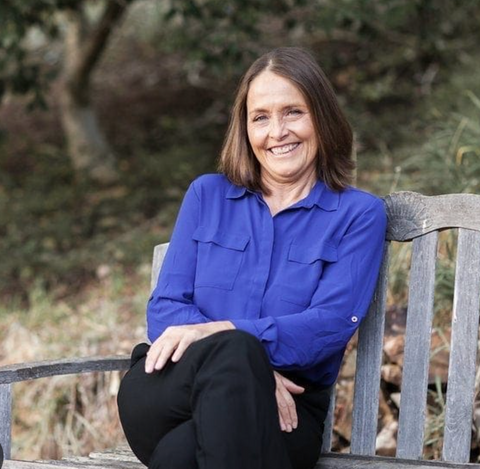
Meet Blair

Blair Lee, MS, is the founder of SEA Homeschoolers. She is a passionate advocate of innovative academics, where the focus is on how subjects are best learned. Through her speaking and writing, her goal is to empower home educators to dare to be innovative and create learning that is unique, academically-rich, and profound when handcrafting their students’ education.
Through SEA Publishing, Blair has authored Microbiology, The Science of Climate Change: A Hands-On Course, and co-authored Project-Based Learning: Creating a Modern Education of Curiosity, Innovation, and Impact. She is the primary author of the critically acclaimed REAL Science Odyssey Series from Pandia Press. She has been involved in science education for over two decades, first as a community college professor and then as a curriculum developer. Blair writes concept-rich, hands-on courses that include mainstream science, presenting the accepted facts, theories, and models as would be recommended by the majority of practicing experts in each field of science.

Modulo's thoughts

Our learning specialists give their honest evaluation
ManishaCEO and Founder

I love Blair and the way she brings science to life. This project-based, hands-on curriculum is everything I believe in. It’s clear, engaging, and designed so that any caregiver can confidently lead the learning.